
Orlando development has not stopped. However, it has slowed just enough to change how decisions get made. Projects still move forward, but budgets now face tighter review. Every early cost gets questioned. Every assumption gets tested. In that process, one line item often rises to the top of the list: the construction survey.
This shift does not mean developers doubt the value of surveying. Instead, it reflects how teams react when markets cool. When money tightens, leaders re-check anything that happens early and feels adjustable. Construction surveys sit right there. They come before dirt moves. They happen before concrete pours. As a result, they draw attention first.
Yet in today’s Orlando market, re-checking a construction survey does not mean cutting it. In most cases, it leads to a clearer understanding of risk, cost, and feasibility.
Orlando’s market has changed how budgets get reviewed
Over the past year, Orlando has seen steady growth, but confidence has softened. Financing has become more careful. Lenders now ask more questions. Investors want stronger proof. Because of that, development teams review budgets with sharper focus.
Instead of asking, “Can we build this?” teams now ask, “Can we build this without surprises?”
That mindset pushes early-stage costs into the spotlight. Design fees, engineering studies, and construction surveys all get another look. Among them, the construction survey stands out because it shapes what comes next. It does not just support construction. It confirms whether the plan fits the site.
Why construction surveys get questioned first
Construction surveys often feel less visible than other costs. You cannot see them stacked on site like materials. They do not show up as progress photos. Because of that, they sometimes look optional when teams review numbers.
At the same time, they happen early. That timing matters. When a budget review starts, early costs feel easier to adjust than late-stage expenses. So decision-makers pause and ask, “Do we need this now?” or “Can we reduce the scope?”
Those questions make sense. However, they also reveal a deeper issue. Many people still see a construction survey as a technical step, not a financial one.
The financial role of a construction survey

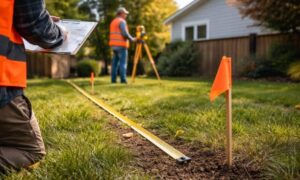
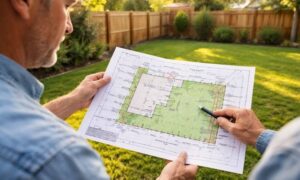
A construction survey does more than mark points in the field. It verifies assumptions that shape the budget. It confirms whether drawings match real conditions. It checks whether elevations, grades, and layouts align with what the project expects to build.
When those assumptions stay untested, costs can drift. Earthwork quantities can change. Drainage plans can shift. Foundation designs can grow more complex. Each adjustment carries a price.
Because of that, a construction survey works as a cost control tool. It reduces guesswork. It replaces estimates with verified data. In a cooling market, that certainty matters more than speed.
Orlando adds unique cost pressure
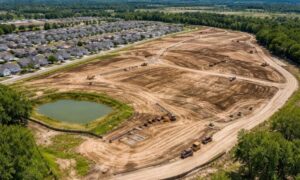
Orlando presents challenges that make early verification critical. The region’s flat terrain often hides drainage issues. Small elevation changes can affect stormwater plans. High water tables can limit how deep systems go. Floodplain edges can reduce usable area.
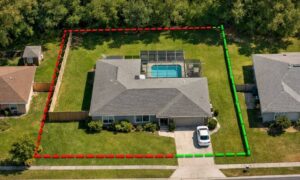
Each of these factors ties directly to cost. Grading budgets depend on elevation accuracy. Drainage systems depend on slope. Building layouts depend on setbacks and site limits. If those details stay unclear, the budget stays exposed.
A construction survey helps bring those issues forward while changes remain manageable. That timing protects both the schedule and the wallet.
Why lenders care more when markets cool
When markets heat up, lenders accept more risk. When markets cool, they do not. In today’s environment, lenders want fewer unknowns before they release funds. They look for proof that the project matches its assumptions.
Construction surveys support that proof. They help confirm that the site can support the planned work. They reduce the chance of mid-project redesigns. They also lower the risk of cost overruns that disrupt loan draws.
Because of that, surveys have become part of financial confidence. They no longer serve only the field team. They support underwriting decisions as well.
Developers are adjusting, not eliminating, survey scope
Smart developers rarely cut construction surveys outright. Instead, they adjust how they use them. Some narrow the focus to cost-critical areas. Others align survey work closely with engineering reviews. Many use survey results to validate pricing before contracts lock in.
This approach keeps spending efficient while protecting capital. It also turns survey data into a decision tool, not just a technical deliverable.
In a cooling market, flexibility matters. Construction surveys offer that flexibility without increasing risk.
The risk of waiting too long
Delaying survey verification can create problems later. Once contracts are signed and materials order, changes become expensive. Redesigns add fees. Revisions delay approvals. Negotiation power fades as commitments harden.
Early survey clarity avoids that trap. It allows teams to confirm assumptions before costs stack up. That timing matters most when budgets face pressure.
In other words, re-checking surveys too late often costs more than reviewing them early.
What this shift says about Orlando development
This trend does not signal decline. Instead, it shows maturity. Orlando continues to grow, but growth now comes with discipline. Developers focus on accuracy. Investors demand clarity. Lenders protect exposure.
In that environment, construction surveys gain strategic value. They support better decisions. They reduce financial noise. They help projects move forward with confidence.
Precision protects capital
In today’s Orlando market, every dollar needs purpose. Construction surveys help ensure that purpose aligns with reality. They reduce surprises. They protect budgets. They support smarter planning.
That is why developers re-check them first. Not to remove them, but to understand them better.
As markets cool, certainty becomes the real cost saver. A construction survey delivers that certainty when it matters most.