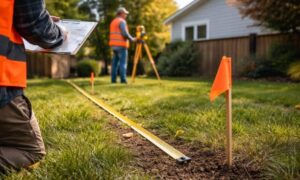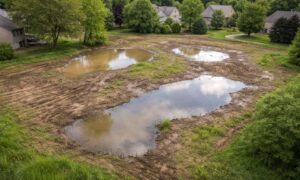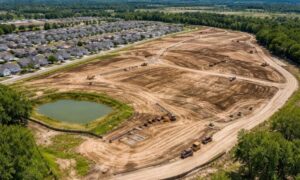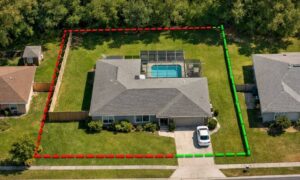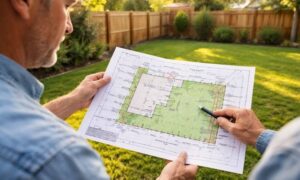

A few days ago, a heated argument between a property owner and a surveyor blew up online. The client wanted the surveyor to “fix” a boundary corner because it didn’t match what they believed was correct. The surveyor refused. Soon after, thousands of people joined the debate. At first glance, it looked like a simple internet drama. However, the story revealed something much bigger. Many property owners still misunderstand what survey mapping actually means — and why it matters so much, especially here in Florida.
If you own property in Orlando or anywhere, this lesson hits close to home.
What Really Happened in the Viral Dispute
In the viral case, the property sat on a curved street in a subdivision. The homeowner assumed their lot had a sharp corner at the curb. However, the survey showed something different. The property line followed a curve, not a straight angle.
The client insisted the surveyor change the map.
The surveyor refused.
Why? Because survey mapping does not rely on what “looks right.” Instead, it relies on legal records, original plats, field measurements, and physical monuments placed in the ground. Changing a map without evidence would create legal problems.
That refusal sparked debate online. Some people sided with the homeowner. Others defended the surveyor. Yet the real issue was simple: misunderstanding.
Why Survey Mapping Often Confuses Property Owners
Many people believe survey mapping just means drawing lines around a property. They think fences, driveways, or landscaping define boundaries. However, that assumption causes trouble.
In reality, professional survey mapping includes reviewing recorded deeds and plats, recovering original survey monuments, measuring distances and angles in the field, using precise GPS and total station equipment, and applying coordinate systems and datums.
Therefore, a property line does not move just because a fence sits in a different spot. Likewise, a driveway does not define ownership.
In Orlando, curved subdivisions make this even more confusing. Many neighborhoods use cul-de-sacs and arc-shaped lots. As a result, corners may not form sharp 90-degree angles. Instead, they follow a radius. To a homeowner, that looks wrong. To a surveyor, it matches the legal record.
Why This Matters in Florida
Florida presents unique challenges. Rapid growth continues across Orlando and Central Florida. Developers build new communities quickly. Meanwhile, older subdivisions follow plats drawn decades ago.
Because of that mix, survey mapping requires careful interpretation.
For example, lakefront properties must respect setback lines. Wetland areas require environmental buffers. HOA communities enforce strict lot boundaries. Older monuments may sit buried or disturbed.
Therefore, small misunderstandings can lead to big problems.
Imagine installing a fence based on guesswork. Later, a neighbor orders survey mapping and discovers the fence crosses the property line. Now you face removal costs, legal fees, and tension next door.
That happens more often than people realize.
What the Viral Story Teaches Orlando Property Owners
Although the online dispute felt dramatic, it offered valuable lessons.
First, survey mapping protects you — even when you disagree with the results. Sometimes a survey surprises owners. However, accurate survey mapping protects your investment. It keeps your title clean. It prevents boundary disputes. It also gives lenders and title companies confidence in the property.
Second, curved lots do not behave like square lots. Cul-de-sacs cause confusion. The arc of the street often shapes the front property line. Because of that curve, corners may sit offset from sidewalks or curbs. In other words, what looks like a straight corner might actually follow a radius. Professional survey mapping calculates that curve precisely. It does not estimate or guess.
Third, communication matters. The viral case also revealed another truth: surveyors must explain results clearly. Property owners deserve to understand what the lines mean. When a surveyor walks the property and shows found monuments, measured angles, radius points, and boundary markers, clients feel more confident. Therefore, clear explanations prevent many disputes before they start.
When You Should Order Survey Mapping
Many disputes begin because owners wait too long.
Instead of assuming, order survey mapping before you build a fence, install a pool, pour a driveway, add a room, purchase vacant land, or sell your property.
In Orlando’s competitive real estate market, clean boundaries speed up closings. Buyers feel more secure. Lenders move faster. Contractors build with confidence.
Moreover, survey mapping supports permit approvals. Local agencies often require accurate boundary data before issuing approvals.
Why “Changing the Map” Is Not Simple
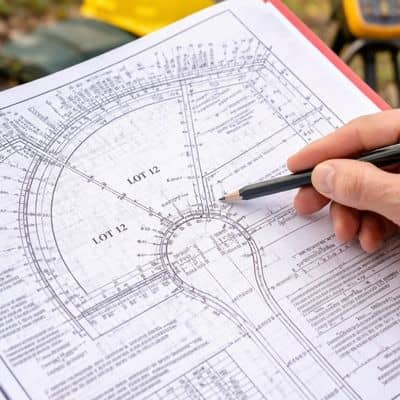
Some people believe surveyors can simply adjust a line if a client asks. However, survey mapping ties directly to legal documents. A survey reflects recorded plats, deeds, and original subdivision layouts.
If someone truly believes an error exists, they must provide legal evidence or pursue a boundary agreement process. Otherwise, altering a map creates legal risk.
That is why licensed surveyors stand firm. They carry responsibility for accuracy. They protect not only the client, but also neighboring property owners.
Orlando’s Growth Makes Accuracy Even More Important
Orlando continues to expand. New housing developments rise quickly. At the same time, older neighborhoods remain active.
Because of that rapid change, survey mapping plays a key role in redevelopment projects, property splits, commercial site planning, infrastructure upgrades, and utility coordination.
Small mapping errors can delay projects. In contrast, precise survey mapping keeps development moving smoothly.
The Bigger Takeaway
The viral dispute showed frustration. Yet it also revealed how vital professional survey mapping remains.
Property lines do not depend on memory, fences, or assumptions. They depend on measured evidence and legal records.
If you own property, especially in Orlando’s curved subdivisions and high-growth areas, never rely on guesswork. Instead, rely on qualified professionals who understand local plats, coordinate systems, and boundary laws.
In the end, survey mapping does more than draw lines. It protects your property rights. It prevents disputes. It supports development. And most importantly, it gives you clarity.
Before you question a boundary line, make sure you fully understand what it represents. Often, the map tells the truth — even when it surprises you.