If you own or rent property in Central Florida, you’ve probably heard the new rule that started on October 1. Landlords now have to tell tenants if a home or apartment is in a flood zone. That news hit just as heavy rain and flood alerts swept across Orlando on October 5–6. With water rising and new laws in place, many landlords are asking one big question: How do I prove whether my property is really at risk? The answer is through a flood elevation survey — a precise way to show how high your building sits compared with the nearest flood level.
Why This Law Matters Right Now
Florida’s new rental law makes flood-risk disclosure part of every lease. That means before you rent out a unit, you must say if it’s in a FEMA-designated flood zone. The goal is simple: protect tenants from surprises when heavy rain hits or when insurance rates climb.
For years, most property owners relied only on FEMA flood maps. But those maps don’t always tell the full story. Orlando’s landscape changes fast — new construction, updated drainage systems, and stormwater projects all shift how water moves. That’s why more property owners are turning to survey data instead of assumptions.
The law doesn’t require an elevation certificate yet, but it’s the only official proof of where your building stands against the base flood elevation (BFE). Without it, landlords may be guessing — and that’s risky for both compliance and insurance.
What a Flood Elevation Survey Actually Shows
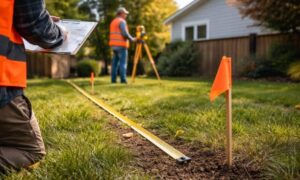
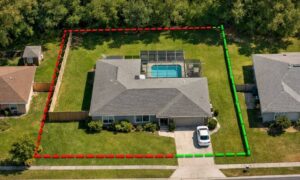
A flood elevation survey measures the height of your property in relation to FEMA’s base flood elevation. Licensed land surveyors use special instruments to collect exact data points around your structure — from the lowest ground level to the floor where you live.
The results go on a FEMA form called an Elevation Certificate. It includes:
- Your property’s address and map panel number
- Ground, foundation, and floor elevations in NAVD 88, the current national datum
- Photos showing each side of the structure
- Certification by a licensed land surveyor or engineer
With this document, you can confirm if your home or rental sits above or below the official flood zone line. That’s valuable for anyone applying for insurance, refinancing, or renewing a policy.
How It Protects Landlords and Renters
For landlords, having a flood elevation survey isn’t just about meeting the law — it’s about credibility and cost control. When you can show clear survey data, tenants trust your disclosure, and insurers trust your numbers. That transparency can even help you secure better rates on flood insurance.
For renters, the same certificate gives peace of mind. It tells them if they need content insurance or should store valuables higher. And for property managers, it prevents the back-and-forth during lease renewals when flood zones change.
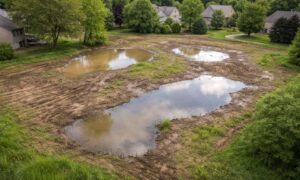
After all, Orlando is no stranger to flash floods. Areas near Shingle Creek, Millenia, and Lake Conway can flood fast after intense rain. Knowing exactly where your building stands is the difference between a surprise water bill and a smooth claim process.
What Happens During the Survey

When you order a flood elevation survey, a local surveyor reviews your FEMA Flood Insurance Rate Map (FIRM) panel to find the official zone. Then they visit your site with a GPS or total station instrument.
They record elevation points at:
- The ground next to the foundation
- The top of the slab or finished floor
- Any attached garages, stairs, or decks
- Key equipment like A/C units and electrical panels
The data are compared with the base flood elevation shown on FEMA’s maps. If your floor is higher than that level, you may qualify for lower insurance rates or even request a Letter of Map Amendment (LOMA) to move your property out of the high-risk zone.
It usually takes only a few business days to finish and deliver your certificate — faster if your surveyor already has benchmark data in your area.
Why Properties Should Act Fast
Two major forces are colliding in 2025: stricter rules and wetter weather.
- The flood disclosure law applies statewide and affects every new rental agreement.
- FEMA continues to update maps, sometimes changing risk zones overnight.
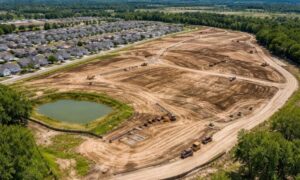
- Orlando’s growth adds more paved surfaces, which means faster runoff and potential new flood pockets.
Waiting until renewal season could leave landlords scrambling for compliance. Getting a flood elevation survey now not only satisfies legal requirements but also keeps you ahead of rising insurance costs.
Even homeowners who don’t rent their property can benefit. If your home was built before current drainage improvements, your old data may be outdated. One new certificate could save hundreds of dollars each year on flood insurance.
How to Read and Use Your Results
Once your surveyor provides the certificate, look for the section labeled “Lowest Floor Elevation.” If that number is above FEMA’s base flood level, your building is generally safe from the 1-percent-annual-chance flood. Share that document with:
- Your insurance company
- Your tenants (as part of your lease packet)
- City or county floodplain officials if you plan to apply for a LOMA
If your structure is below the base flood elevation, the certificate will show by how much. In that case, consider simple mitigation steps like elevating mechanical equipment or improving site drainage — both of which can reduce your insurance risk category.
Next Steps Toward Resilience
City officials and floodplain managers continue to encourage property owners to verify their data instead of relying on map zones alone. The combination of real-time rainfall patterns and elevation surveys creates a stronger defense for the whole community.
When a landlord knows their numbers, they disclose confidently. When a tenant understands the risk, they plan better. And when a surveyor confirms the elevation, everyone wins.
The Bottom Line
The new disclosure law isn’t just another requirement — it’s a reminder that water doesn’t wait for anyone. Orlando’s latest flood alerts proved that even areas outside FEMA’s red zones can get soaked overnight.
A flood elevation survey gives hard facts in a changing climate. It tells you where your property truly stands, keeps your leases compliant, and protects both your tenants and your investment.
If you’re a landlord, property manager, or homeowner, now’s the perfect time to schedule one. Rainy season isn’t over — and the law is already in effect.