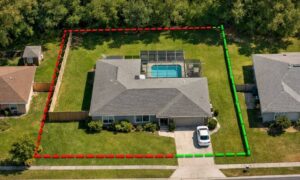
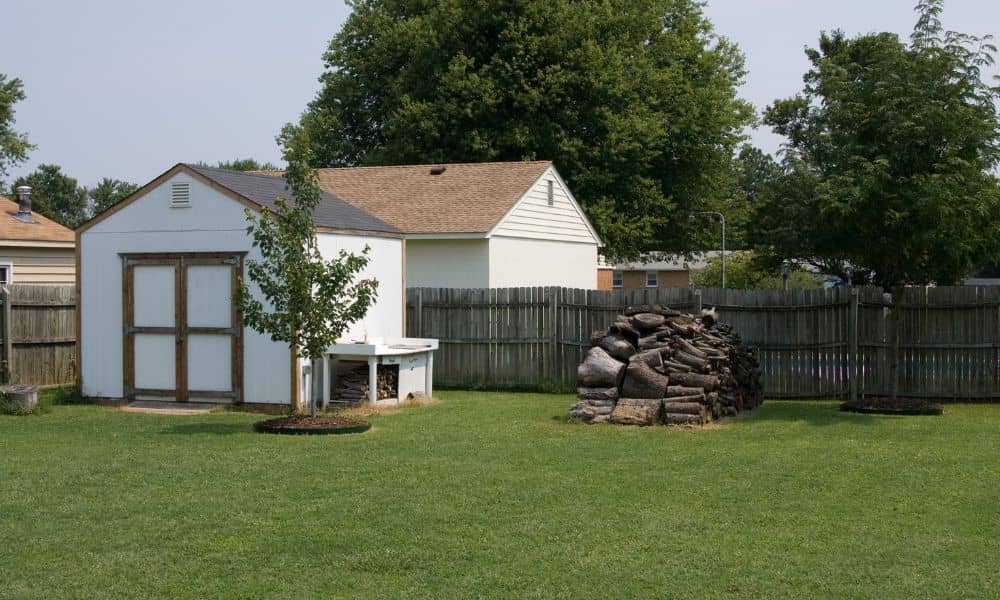
Scroll through social media for five minutes and you’ll see it. A fence goes up. A neighbor gets angry. An HOA sends a warning letter. Someone waves a blurry plat map and says, “That’s my land.” Suddenly, a simple yard project turns into a full-blown property war. These HOA property line disputes keep going viral because people relate to them. Orlando neighborhoods have tight lot lines, active HOAs, and plenty of backyard upgrades. However, most of these fights share the same root problem: nobody ordered a proper metes and bounds survey before the project started.
Why These Disputes Happen So Often in Orlando
Orlando neighborhoods pack homes close together. Many communities sit inside HOA-managed subdivisions. As a result, homeowners often push improvements right up to the edge of their property.
Fences. Pools. Patio extensions. Sheds. Driveway widenings.
At first, everything seemed fine. Then a neighbor claims the fence sits six inches over the line. Or the HOA says your structure violates setback rules. Meanwhile, both sides pull up Google Maps and start arguing.
Here’s the problem: Google Maps does not control property boundaries. The county appraiser’s sketch does not control them either. Even an old survey from your closing may not reflect current field conditions.
Only a current, professionally performed metes and bounds survey can define the true boundary on the ground.
The Three Biggest Mistakes Homeowners Make
Most disputes don’t start with bad intent. Instead, they begin with small assumptions.
1. Trusting the Fence Line
Many people believe the existing fence marks the boundary. However, fences move. Contractors guess. Previous owners make mistakes. A fence only shows where someone built it — not where the legal line sits.
2. Relying on an Old Survey
Your closing survey might be 10, 20, or even 30 years old. Since then, monuments may have shifted. Adjacent properties may have new surveys. Over time, small measurement conflicts can appear.
3. Believing the HOA Decides the Boundary
HOAs enforce community rules. They do not determine ownership lines. While they may issue violation letters, they cannot override recorded legal descriptions.
That’s where a metes and bounds survey comes in.
What a Metes and Bounds Survey Actually Does
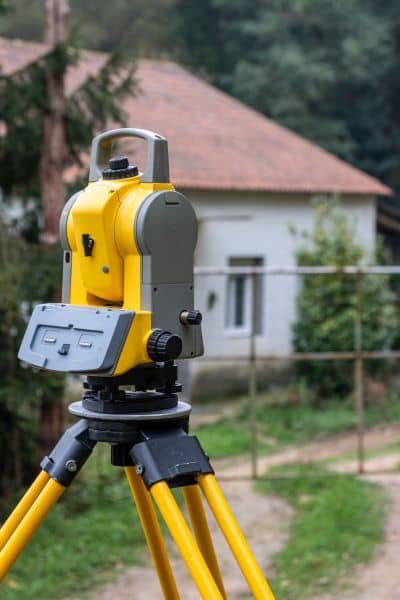
The phrase “metes and bounds” sounds technical. In simple terms, it describes land using directions and distances.
A surveyor reads the legal description in your deed. That description includes:
- Bearings (the direction of each line)
- Distances (how long each line runs)
- Calls to monuments (iron rods, markers, or physical features)
- References to adjoining properties
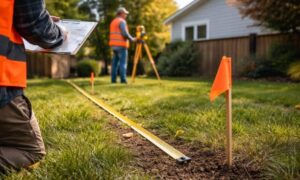
Next, the surveyor goes into the field. They locate existing monuments, measure lines with precise equipment, and confirm that the legal description “closes.” In other words, the lines must connect back to the starting point without gaps or overlap.
When done correctly, a metes and bounds survey places the boundary where the law recognizes it — not where a neighbor guesses it sits.
Why Viral Disputes Keep Escalating
You’ve probably seen this online: one neighbor orders a survey. The other neighbor says it’s wrong. Then the fight grows louder.
This happens because most people don’t understand how boundary evidence actually works.
Surveyors don’t just measure distances and draw lines. They look at physical markers in the ground. They review older deeds. They compare adjoining properties. In many cases, an older monument can control over a newer measurement. Senior property rights can even override junior descriptions.
So when someone says, “I got a survey and you’re wrong,” that only holds up if the survey followed proper boundary principles.
A defensible metes and bounds survey stands on more than opinion. It follows established surveying standards and the state rules that govern how land boundaries are determined. If you ever glance at Florida property boundary laws, you’ll notice they focus on recorded descriptions and monument evidence — not fence placement or online map outlines. That’s why arguments based on screenshots rarely hold up when real evidence comes into play.
Orlando-Specific Projects That Trigger Boundary Problems
In Central Florida, certain projects create risk fast.
Fence Installations
Many HOAs require fence approval. However, approval does not confirm your property line. If you build first and survey later, you may face removal costs.
Pool Construction
Pools require permits. Contractors often work near setback limits. Even a small boundary error can push a pool shell into restricted space.
Shed and Patio Additions
Homeowners often place sheds along rear or side yards. These spots sit closest to neighbors. Small mistakes cause big conflicts.
When you look at how quickly these projects add up, it makes sense to pause and confirm where your property actually ends. Many homeowners do that by scheduling a boundary survey in Orlando before construction begins. That simple step can prevent expensive corrections and uncomfortable conversations later.
Warning Signs You Should Not Ignore
Sometimes, disputes start quietly.
Maybe your neighbor suddenly asks about your fence location. Perhaps you can’t find corner markers in your yard. Or maybe you bought an older home and never confirmed the boundary.
Additionally, if your HOA sends a compliance letter about encroachment, don’t guess. Don’t argue. Don’t rely on online maps.
Instead, order a proper survey and confirm the facts.
Why Waiting Makes It Worse
Some homeowners avoid surveying because they want to save money. That decision often costs more later.
If you build on the wrong side of the line, you may face:
- Fence removal costs
- Construction delays
- Legal consultations
- HOA fines
- Strained neighbor relationships
On the other hand, a metes and bounds survey provides confidence before construction begins. It protects your investment. It reduces stress. It prevents public drama.
In fast-growing areas like Orlando, land value keeps rising. Therefore, even small boundary errors can carry serious financial impact.
The Real Lesson Behind the Viral Stories
Online disputes attract attention because they feel dramatic. However, behind every viral property fight lies a simple issue: someone skipped the boundary confirmation step.
You don’t need to become a land law expert. You don’t need to argue with neighbors. You don’t need to interpret old deed language alone.
You need clarity on where your land begins and ends.
A professionally completed metes and bounds survey delivers that clarity. It defines your boundary using recorded descriptions and physical evidence. It removes guesswork. Most importantly, it gives you solid ground to stand on.
Final Thought for Homeowners
If you plan to build near your property line, pause first. Social media may turn disputes into entertainment. However, in real life, those conflicts cost time, money, and peace of mind.
Before you pour concrete, set posts, or sign HOA forms, confirm your boundary the right way.
In the end, only one thing truly matters in a property line dispute: a current, defensible metes and bounds survey that places the boundary exactly where the law says it belongs.
And that peace of mind is worth far more than a viral argument.