
If you’ve ever asked, “How do I find my property line?” you’re not alone. In fact, this is one of the most common questions homeowners ask —especially before putting up a fence, building a pool, or fixing a boundary issue with a neighbor.
While it may seem simple at first, finding a property line without clear proof often leads to stress, delays, and costly mistakes. So instead of guessing or relying on what “looks right,” let’s walk through how property lines really work and how to find yours with confidence.
Why Property Lines Are Often Confusing in Orlando
Orlando neighborhoods vary widely. Some areas have older subdivisions with outdated records, while others see constant redevelopment. Because of this, property lines are not always obvious on the ground.
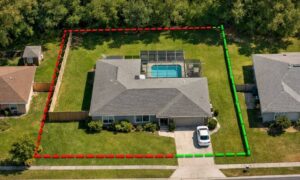
For example, many homeowners assume a fence marks the legal boundary. However, fences often sit inside a property line, not on it. Likewise, hedges, sidewalks, and driveways may follow convenience—not legal boundaries.
As a result, guessing where a line sits can create problems later. That’s why understanding what actually defines a property line matters so much.
The Most Common Mistake People Make When They Try to Find Their Property Line
One of the biggest mistakes homeowners make is relying on online maps. Google Maps, county GIS tools, and real estate apps may show parcel lines, but those lines are only estimates.
Although these tools help with general orientation, they are not accurate enough for decisions involving construction, permits, or disputes. Even small errors can lead to big issues later.
In other words, these maps can point you in the right direction—but they cannot give you a legally reliable answer.
What Really Defines a Property Line
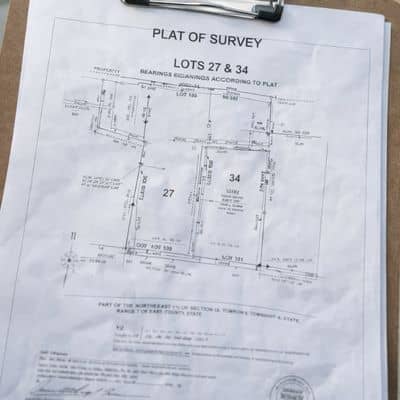
A property line is not based on what you see. Instead, it is defined by legal records and physical evidence placed by professionals.
In Orlando, property lines come from:
- Recorded plats or legal descriptions
- Deeds filed with the county
- Boundary monuments placed during past surveys
Over time, surveyors compare these records with what exists on the ground. Then, they determine the true boundary using accepted standards. Because of this process, a property line stays consistent—even if fences or landscaping change.
Can You Find Your Property Line on Your Own?
You can take a few steps to get a general idea of where your property line may be. For instance, you can:
- Review your closing documents
- Look for a recorded plat online
- Walk your lot to find metal or concrete markers
However, these steps only give rough guidance. Without professional verification, you still won’t know the exact location.
So, if your goal is to plan landscaping, this may be enough. But if your goal involves money, construction, or legal clarity, rough estimates fall short.
When a Boundary Survey Becomes Necessary
Many homeowners wait too long before ordering a survey. Unfortunately, that delay often causes problems.
You should strongly consider a boundary survey if you plan to:
- Build a fence or wall
- Install a pool or driveway
- Add an extension to your home
- Resolve a disagreement with a neighbor
- Buy or sell property
In these cases, guessing can cost more than doing it right the first time. A survey gives you clear, defensible answers that protect your investment.
What a Licensed Land Surveyor Does to Find Your Property Line
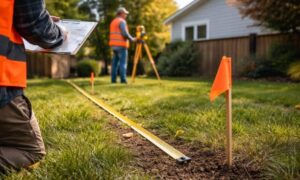
When you hire a licensed land surveyor, the process goes far beyond measuring tape and guesswork.
First, the surveyor researches recorded documents tied to your property and nearby lots. Next, they analyze how those records fit together. Then, they locate or re-establish boundary markers using precise equipment.
Finally, they prepare a survey that shows your property line clearly and accurately. This survey holds legal weight and helps avoid future disputes.
Because of this careful process, a survey gives peace of mind that online tools simply cannot match.
What Property Line Markers Look Like in Orlando
Many homeowners expect markers to be easy to spot. However, property corners are often small and hidden.
Markers may include:
- Metal rods flush with the ground
- Concrete monuments near corners
- Older markers buried under soil or grass
Since these markers are not always visible, a professional surveyor knows how to locate them without disturbing your property.
How Long It Takes and What to Expect
The time needed to complete a survey depends on several factors. Properties with clear records move faster. On the other hand, older lots or those with missing markers may take longer.
In most cases, homeowners only need to provide basic details, such as the property address. From there, the surveyor handles the technical work.
While the process takes some patience, the clarity it provides lasts for years.
Why “Close Enough” Can Turn Into a Costly Problem
At first, guessing a property line may feel harmless. However, small mistakes often lead to bigger consequences.
For example, a fence built inches over the line may need removal later. Likewise, a misplaced driveway can delay permits or trigger disputes.
Instead of fixing problems after the fact, finding your property line early helps you move forward with confidence.
Final Thoughts: Stop Guessing and Get Clear Answers
If you’ve been wondering how to find my property line, the key takeaway is simple: visual clues are not enough. Property lines are legal boundaries, and only proper verification gives certainty.
By understanding the limits of online tools and knowing when professional help matters, you protect both your property and your peace of mind.
In a growing city like Orlando, clarity today prevents conflict tomorrow.