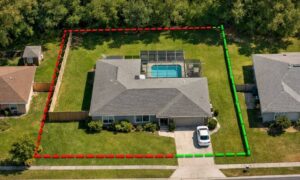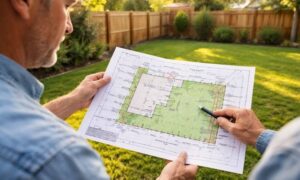

Drone surveying plays a huge role in construction today. Builders use it for grading checks, topographic maps, and layout planning. However, this week’s viral solar storm created an unexpected problem: GPS signals became unstable. When GPS gets shaky, drone surveying becomes unreliable too. And even small errors can cause big setbacks for homeowners, contractors, and developers.
A sky show that turned into a construction problem
Everyone saw the viral photos and videos of bright auroras lighting up the sky across the country. People shared them nonstop on social media. It felt like a once-in-a-lifetime moment. But while the lights were beautiful, they came from a strong geomagnetic storm—one of the biggest in years.
A geomagnetic storm happens when a burst of charged particles from the sun hits Earth’s magnetic field. This event looks amazing in the sky, but it also disrupts radio signals, satellites, and GPS accuracy. Surveyors, farmers, pilots, and drone operators rely on those signals every day. When a storm this strong hits, their tools don’t work the way they should.
What a solar storm does to GPS signals
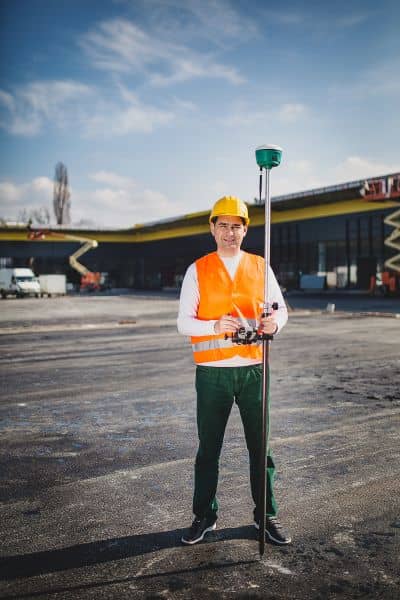
Most people think GPS just tells you where you are on a map. Surveyors know it’s much more precise. A regular smartphone might be off by a few feet, but professional surveying-grade GPS must be accurate within an inch.
Drone surveying depends on special GNSS corrections called RTK and PPK. These give drones the exact height and location needed to build accurate 3D models. During a solar storm, those corrections can drift. Even if the drone is stable in the air, the satellite signals break down. As a result, the drone records wrong positions.
When GNSS correction drifts, real-world problems appear fast:
- Elevations shift by several inches.
- Corners and property lines move on the map.
- 3D models show waves or tilts.
- Control points don’t match up.
Nothing looks “broken,” but the numbers become unreliable. This is dangerous when a builder relies on a drone survey to set foundations, drainage, or grading.
Why this matters even more
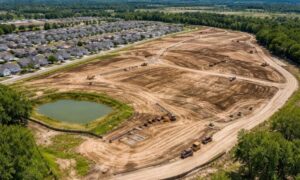
Orlando is growing fast, and new communities appear everywhere—Lake Nona, Horizon West, Apopka, Winter Garden, and more. With all that expansion, drone surveying became the go-to method for quick and accurate site updates. But Orlando also has unique challenges that make even small survey errors risky.
1. Flooding and low-elevation areas
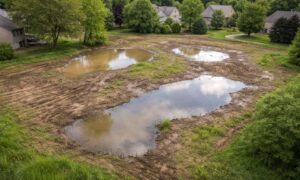
After heavy rains, roads and neighborhoods in Central Florida often flood. In some recent events, parts of Lake County saw more than a foot of rainfall. Because so many local lots are flat, drainage design depends on precise elevations. A small error from a solar-storm GPS drift can throw off a grading plan, slow down a permit, or force a costly redesign.
2. Retention ponds and wetlands
Many subdivisions sit next to ponds or conservation areas. If a drone survey shifts even slightly, the boundaries between buildable and protected land can appear incorrect.
3. Fast-paced construction schedules
Contractors often rely on quick drone updates to plan their next steps. But when GPS signals are unstable, rushing ahead can cause mistakes that cost time and money later.
What builders and homeowners should watch for this week
When GPS is unstable, a drone survey might still “look” normal. The map loads correctly. The contours appear smooth. The points align. Yet the numbers may be off by inches. And those inches matter.
Here’s what builders should keep an eye on during and after a solar storm:
Unexpected elevation shifts
If the storm created measurement drift, your last drone survey might show a slope that doesn’t exist or hide a dip that does.
Corners and stakes that don’t match the drone map
If the staked corners from a total station don’t match the drone data, trust the total station. It’s not relying on satellite corrections the same way.
Weird contour patterns
Sometimes the ground model looks slightly “wavy,” especially on large flat lots. This is a sign of poor GNSS accuracy.
Delayed drone flights
If your surveyor postponed a drone flight, that’s a good thing. It means they’re protecting the accuracy of your measurements.
What good surveyors are doing to protect accuracy
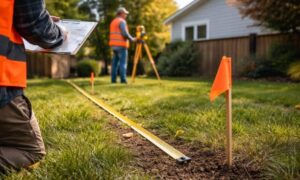
Experienced surveyors know that solar storms happen, and they take them seriously. A responsible team doesn’t just fly the drone and hope for the best. They slow down and verify everything.
They double-check ground control
Surveyors test known points before flying. If those points drift, they know the drone data will drift too.
They watch NOAA space weather alerts
NOAA reports when GPS conditions are unstable. Good surveyors check these alerts the same way pilots check weather.
They verify critical elevations with total stations
If drone data looks even slightly suspicious, surveyors confirm major points with ground equipment.
They re-fly the site when needed
Sometimes the safest choice is to fly again once the storm passes.
This prevents headaches for contractors and homeowners later.
Should builders pause critical measurements this week? Yes.
If you have a project requiring precise grading, foundation layout, drainage work, or boundary-based planning, waiting 24–48 hours can save you thousands of dollars. Solar storms usually calm down quickly, and once they do, GPS accuracy returns to normal.
Here are situations where you should pause or request verification:
- You are about to pour a foundation.
- You are finalizing elevations for a driveway or patio.
- You are submitting plans that rely on fresh drone data.
- You are planning work near wetlands or flood zones.
- Your contractor is staking corners based on this week’s drone survey.
It’s better to delay than risk building something in the wrong place.
Questions to ask your surveyor before using any drone data this week
You don’t need to be a technical expert. Simple questions go a long way:
- “Did you check for solar storm activity before flying?”
- “Were GNSS corrections stable during the flight?”
- “Did you confirm elevations with ground equipment?”
- “Are these measurements safe to use for construction?”
A good surveyor will answer confidently. If not, ask them to verify.
Final thoughts
The viral solar storm gave people across the country a rare view of glowing auroras. But here in Orlando, it also brought a hidden problem: unreliable GPS signals. Because drone surveying depends on those signals, even a beautiful sky event can cause serious construction issues.
If you’re building, planning, or submitting permits, take a moment to ask how your surveyor handled this week’s GPS disruptions. A small pause now can prevent big mistakes later.