
News about a road collapse near Orlando caught a lot of attention this week. Videos showed a large ground depression and blocked traffic. Naturally, homeowners and buyers asked the same question: If the ground can fail there, what about the property I’m buying? That reaction makes sense. After all, most people want certainty before they invest in a home. However, many people jump to the wrong conclusion about what protects them. They think inspections, insurance, or seller disclosures cover everything. In reality, one basic step still gets skipped too often — ordering a home survey.
Why Ground Collapse News Hits Home Buyers Hard
When people see pavement drop or soil give way, they picture their own street. They imagine hidden problems under their yard. As a result, fear spreads faster than facts.
However, not every ground event signals a neighborhood-wide danger. Still, these stories remind buyers of something important: land conditions matter just as much as the house itself.
Most buyers focus on the building. They check the roof, the walls, and the plumbing. Meanwhile, they forget to verify the land boundaries and recorded layout. That gap creates risk — not from collapse — but from costly ownership mistakes.
Therefore, smart buyers use moments like this as a trigger to double-check their due diligence steps.
What a Home Survey Actually Covers
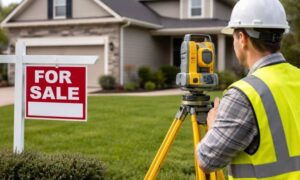
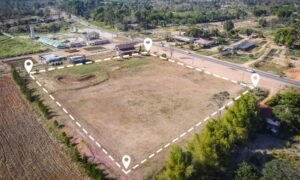
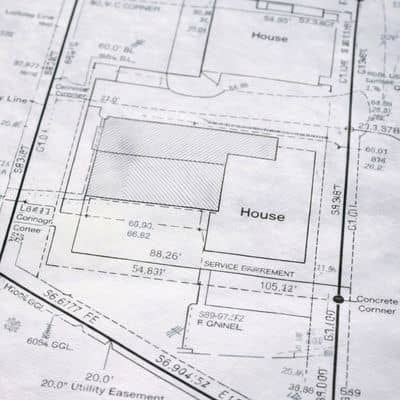
A home survey gives you a clear, measured picture of the property boundaries and recorded features. In simple terms, it shows what you legally own on the ground — not just on paper.
A proper home survey confirms:
- Boundary lines
- Corner locations
- Fence placement
- Building position on the lot
- Encroachments from neighbors
- Recorded easements
- Setback distances
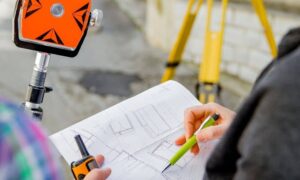
In other words, it turns map lines into real-world positions.
That clarity helps buyers avoid disputes and surprises. It also helps with permits, additions, and resale later.
What a Home Survey Does NOT Tell You
Now let’s stay honest and clear. A home survey does not predict sinkholes. It does not test soil strength. It does not evaluate foundation stability.
Instead, other specialists handle those tasks.
For example:
- A home inspector checks structure and systems
- A geotechnical engineer studies soil behavior
- A structural engineer reviews foundation issues
- An elevation certificate supports flood insurance rating
So, a home survey focuses on location and legal layout, not underground science.
Even so, that role still matters — especially when ground movement stories create uncertainty. Because when land shifts over time, boundaries and improvements often drift out of place too.
Why Collapse Stories Increase Survey Value — Not Fear
Some buyers react to collapse news with panic. However, experienced professionals react with process. They tighten documentation and verify facts.
That’s where a home survey fits in.
For instance, after heavy rain, erosion, or grading changes, fences sometimes move. Retaining walls sometimes cross lines. Driveways sometimes extend beyond recorded limits. Without a survey, nobody notices until a dispute starts.
Therefore, a home survey reduces argument risk — not ground risk — and that still protects your investment.
A Very Common Orlando-Area Scenario
Let’s use a simple, relatable example.
A buyer purchases a home with a rear fence line that looks straight and clean. The seller says, “That’s the boundary.” The buyer believes it. No one orders a home survey.
Six months later, the neighbor installs a new fence two feet inside that line. A disagreement follows. Both parties pull old sketches and online parcel maps. None of them match.
Now the buyer must order a rush survey anyway — plus deal with stress and legal letters.
On the other hand, a pre-closing home survey would have settled that line on day one.
The Confusion Between Online Maps and Real Surveys
Today, buyers rely heavily on online parcel viewers. County GIS maps look official, so people treat them like proof. However, those maps serve only as rough guides.
They help with planning — not with legal boundary decisions.
Lines on those maps often sit several feet off from true measured positions. That gap causes real problems when fences, sheds, or additions sit near edges.
So although online tools help with research, only a field-performed home survey gives defensible boundary data.
When You Should Strongly Consider a Home Survey
Not every purchase requires the same level of survey work. Still, certain situations raise the need right away.
For example:
If the lot shape looks irregular, get a home survey. If fences sit close to edges, get a home survey. If the property borders water or drainage paths, get a home survey. If you plan to build or expand soon, get a home survey. If neighbors added structures near lines, get a home survey.
In each case, early measurement prevents later conflict.
Cost vs Consequence — The Real Math
Some buyers hesitate because of the price. They see the survey fee and try to skip it. That choice often backfires.
Fence relocation costs more. Encroachment disputes cost more. Permit delays cost more. Legal letters cost more.
Meanwhile, a home survey gives long-term value. You can reuse it for projects, listings, and boundary questions later. So the cost spreads out across years of ownership.
Therefore, the smarter question shifts from “Can I skip this?” to “What risk disappears if I include this?”
How This Connects Back to the Orlando Collapse Story
The road collapse near Orlando raised awareness about land conditions. That awareness actually helps buyers think more carefully about property due diligence.
However, instead of reacting with fear, buyers should react with structure.
Order the right reports. Ask the right questions. Document the right facts.
A home survey will not predict ground failure. Yet it will confirm exactly what you own and where it sits. That certainty supports every other decision you make about the property.
The Bottom Line for Buyers
News events come and go. Headlines change every week. Still, property boundaries stay important every year you own a home.
A home survey gives clarity, proof, and peace of mind. It prevents avoidable disputes. It supports permits and improvements. It protects resale value.
So if you plan to buy near Orlando — or anywhere — ask about the survey early. Because confidence at closing starts with verified lines on the ground, not guesses on a screen.